Guide to Supply Chain Sustainability 2023
 Shantala HickeyDirector, ESG Division, GPSI
What is supply chain sustainability, why does it matter, and how do you develop a strategy? This guide covers the evidence-based essentials — from renewable energy to building a green, transparent, and circular supply chain.

The Covid-19 pandemic exposed the vulnerabilities of outdated supply chains. Companies that assessed their operations against climate conditions, consumer behaviour, and market changes outperformed those that ignored sustainability — meeting rising demand for fast shipping, quality, and eco-friendly products. Achieving end-to-end visibility now depends on real-time data, third-party logistics networks, and a greater reliance on cutting-edge technology.
Key Takeaways
- Sustainable supply chains focus on ethical, social, environmental, and responsible practices — reducing ecosystem impact, decreasing costs, achieving transparency, generating higher ROI, and delivering value to end consumers.
- Sustainability is impossible without integrating renewable energy and cutting-edge systems — artificial intelligence, machine learning, blockchain, and enterprise resource planning tools.
At a GlanceSustainable priorities in supply chain management for 2023
| Sustainable priority | Key insights | Value to businesses |
|---|---|---|
| Renewable energy integration | Transitioning to sustainable energy sources. | Reduces carbon footprint and operational costs. |
| Eco-friendly supply chain design | Implementing green logistics and packaging. | Enhances sustainability and meets regulatory demands. |
| Transparency & compliance | Ensuring ethical sourcing and clear reporting. | Builds trust and regulatory adherence. |
| Advanced technologies | Utilizing AI and IoT for sustainable operations. | Improves efficiency and resource management. |
Section 01The integration of renewable energy sources
Renewable energy — hydro, biomass, wind, solar, and geothermal — provides clean, reliable, safe power with lower or zero carbon emissions, unlike fossil fuels. Companies should treat it as a strategic asset, not a tactical expense: it offers risk management and cost benefits, and a more predictable, consistent supply than nuclear or fossil fuels.
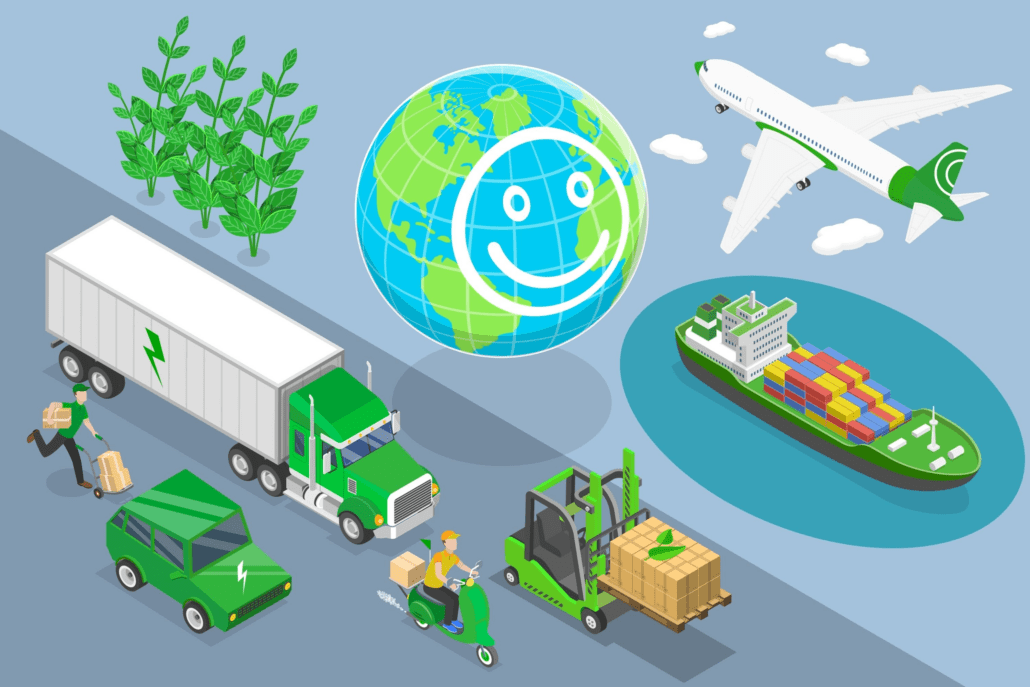
Most companies procure offsite renewable energy at scale through power purchase agreements (PPAs), which fix the price of electricity over 15–20-year contracts — a sustainable way to manage material input and optimize the cost structure versus monthly billing.
Per GreenBiz, companies implementing sustainable strategies increase their revenues by this much — because consumers choose products from more eco-friendly, socially responsible companies.
The benefits of renewable energy in the supply chain
- Provides price stability and decreases long-term costs
- Reduces future risks from fossil-fuel price changes
- Improves brand value and corporate reputation
- Drives new revenues and corporate growth
- Enhances employee engagement and organizational culture
- Helps the company stand out and provide value to end consumers
Section 02Sustainability in supply chain design & management
Per a study by IBM, consumer expectations have shifted decisively toward sustainability — and companies that create sustainability policies and implement eco-friendly practices achieve greater transparency, efficiency, and reliability.
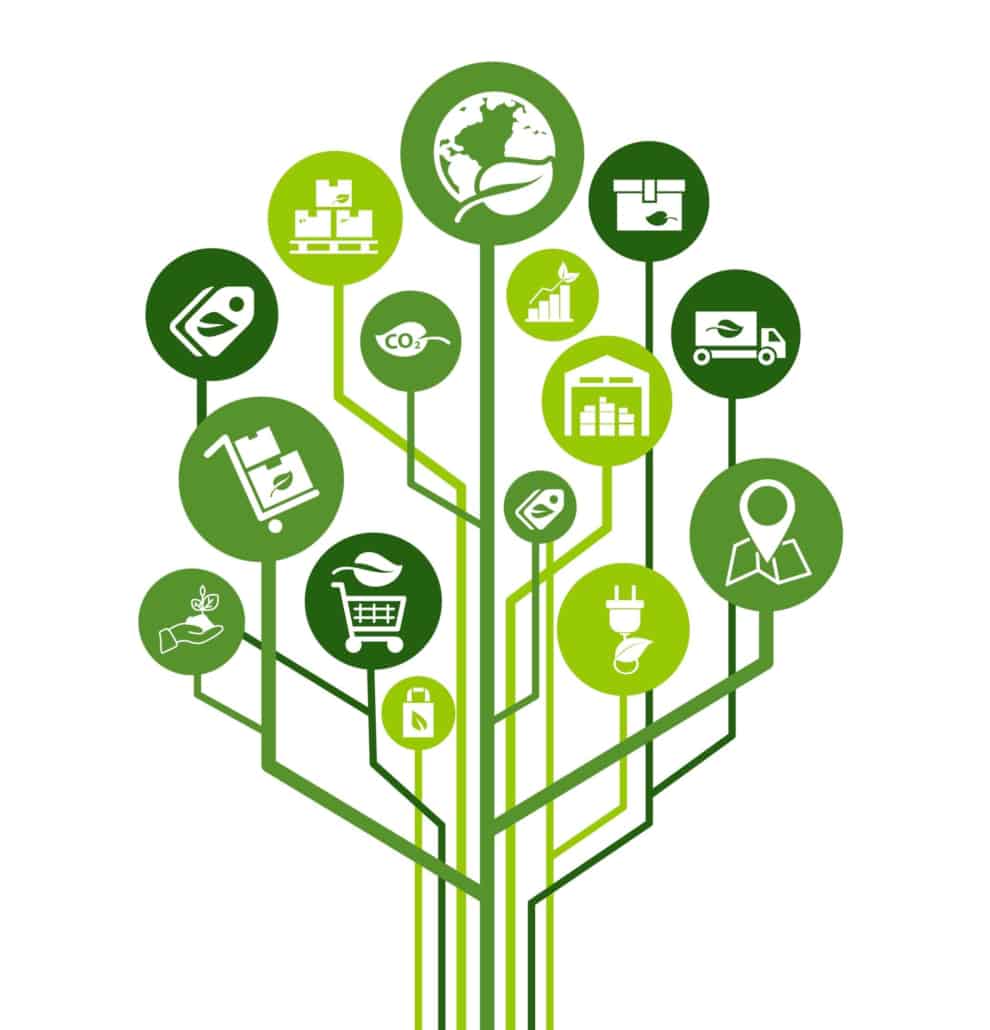
Per a PwC survey, 7% of supply chain companies implementing sustainable practices see reduced costs and higher revenues — and over 6,000 executives say digital transformation is essential to cutting costs through real-time data.
Per Forbes, 88% of consumers remain loyal to socially and environmentally responsible businesses; per the IBM Institute for Business Value, 69% would accept a job at a sustainable company.
Transparency with digital security lets you end partnerships with unscrupulous manufacturers and track materials, labour, and product security from source to destination — avoiding reputational and legal damage.
57% of supply chain owners are unaware of ESG issues. Per the World Economic Forum, aligning operations with ESG goals, lean principles, and executive-linked targets reduces costs and increases revenues.

Section 03How to build a sustainable supply chain
A sustainable supply chain uses socially and environmentally responsible practices at every stage. Environmental standards address degradation, deforestation, pollution, emissions, and water security; social standards cover working conditions, fair labour, and worker health and safety. A product that benefits the environment but harms workers or communities is not sustainable — ethical, social, communal, and governance sustainability matter as much as environmental.

Step 01Understand supply chain sustainability
The pandemic made sustainability more holistic — spanning “green,” “transparent,” and “circular” supply chains. Understanding these components is essential to a solid, risk-free strategy.
Environmentally responsible strategies — green product design, material sourcing, lower manufacturing emissions, and sustainable logistics and end-of-life management. AI/ML can identify risks and trends in real time.
Disclosing information about goods, labour, and operations to build trust. AI, ML, blockchain, RFID, and IoT provide irrefutable records and real-time insight.
Reducing products to raw materials and remanufacturing on ethical, eco-friendly principles to leverage recycling. Per Gartner, about 70% of supply chain businesses plan to invest in this model.
Step 02Collaborate and share data
Most global supply chains rely on low-tier suppliers, and complying with ethical, green standards is challenging — especially in developing countries. Per the Fashion Transparency Index, transparency has improved through real-time data sharing and collaboration, which also helps companies better predict demand and make sustainable, ethical sourcing decisions using predictive modelling and machine learning.
Step 03Set standards and goals
Setting benchmarks, goals, and guidelines requires getting all stakeholders on board; third-party services can help meet ESG criteria, and digital technologies track and manage compliance. Per Bank of America, companies with a better ESG record than competitors generate three times higher ROI, along with stronger brand recognition.
Step 04Leverage technologies
Supply chain sustainability is impossible without digital transformation, which helps companies meet and exceed benchmarks while growing operations and returns.
Curates and analyzes large volumes of data for real-time insight — tracking package location and status, automating agile workflows, and reducing waste and energy usage.
Robotics and automated tools can reduce shipping times by 149% — with inventory robots and drones optimizing warehousing, energy use, and fuel consumption.
Enables virtual inventories and on-demand, onsite manufacturing — eliminating overseas packing and shipping and using recycled plastics from the supply chain loop.
Connected devices optimize data exchange and asset intelligence; RFID sensors track products and raw materials from source to destination for transparency and sustainability.
Step 05Implement a green marketing strategy
Consumers don’t know what you don’t tell them. Per Forbes, green marketing improves brand image, increases loyalty, and boosts the bottom line. It requires companies to:
- Create environmentally friendly products from ethically sourced materials
- Reduce the carbon footprint and greenhouse gas emissions
- Use eco-friendly packaging from recycled materials
- Adopt sustainable business practices
- Communicate products’ environmental and social benefits
- Invest in renewable energy to reduce fossil-fuel usage
Final WordsThe need of the hour
Supply chain sustainability is essential to overcome current and future challenges — embedding social, environmental, and fair governance throughout the chain and strengthening relationships with stakeholders and customers, who increasingly tie purchasing decisions to sustainability.
Develop a sophisticated plan by setting goals, finding the right technologies, and getting everyone on board to maintain agile, sustainable practices throughout the supply chain. — Shantala Hickey, Director, ESG Division
Frequently asked questions
What is supply chain sustainability?
Why is supply chain sustainability important?
How do you build a sustainable supply chain?
What role does renewable energy play in supply chain sustainability?
Which technologies enable supply chain sustainability?

Shantala joined GPSI’s team in 2022, following her post-graduate diploma in Environmental Management. She is responsible for the ESG Division and the corporate social responsibility strategy. Before joining GPSI, she held several management positions at Bombardier Aerospace as well as Galderma, a company operating in the pharmaceutical and cosmetics industry. She has more than 15 years of experience in procurement, logistics, and production planning. The environment and sustainable development are undoubtedly her greatest passions.
Related Work
Sustainability and ESG work from the GPSI practice.

Giolong International — Integrating Sustainability into the Supply Chain
Read case study →
Growth of the Circular Economy and Closed-Loop Supply Chains
Read article →
The Role of AI in Creating Sustainable Supply Chains
Read article →Build your supply chain sustainability strategy
GPSI’s ESG & Sustainability division helps companies integrate renewable energy, transparency, and circular practices — and the technologies that make them work. Let’s find a time to connect.
Explore Supply Chain Sustainability Canada toll free: 866-980-1387 · US: 316-263-1288 · UK: 44 121 295 6504