Growth of the Circular Economy and Development of Closed-Loop Supply Chains
 Shantala HickeyDirector, ESG Division, GPSI
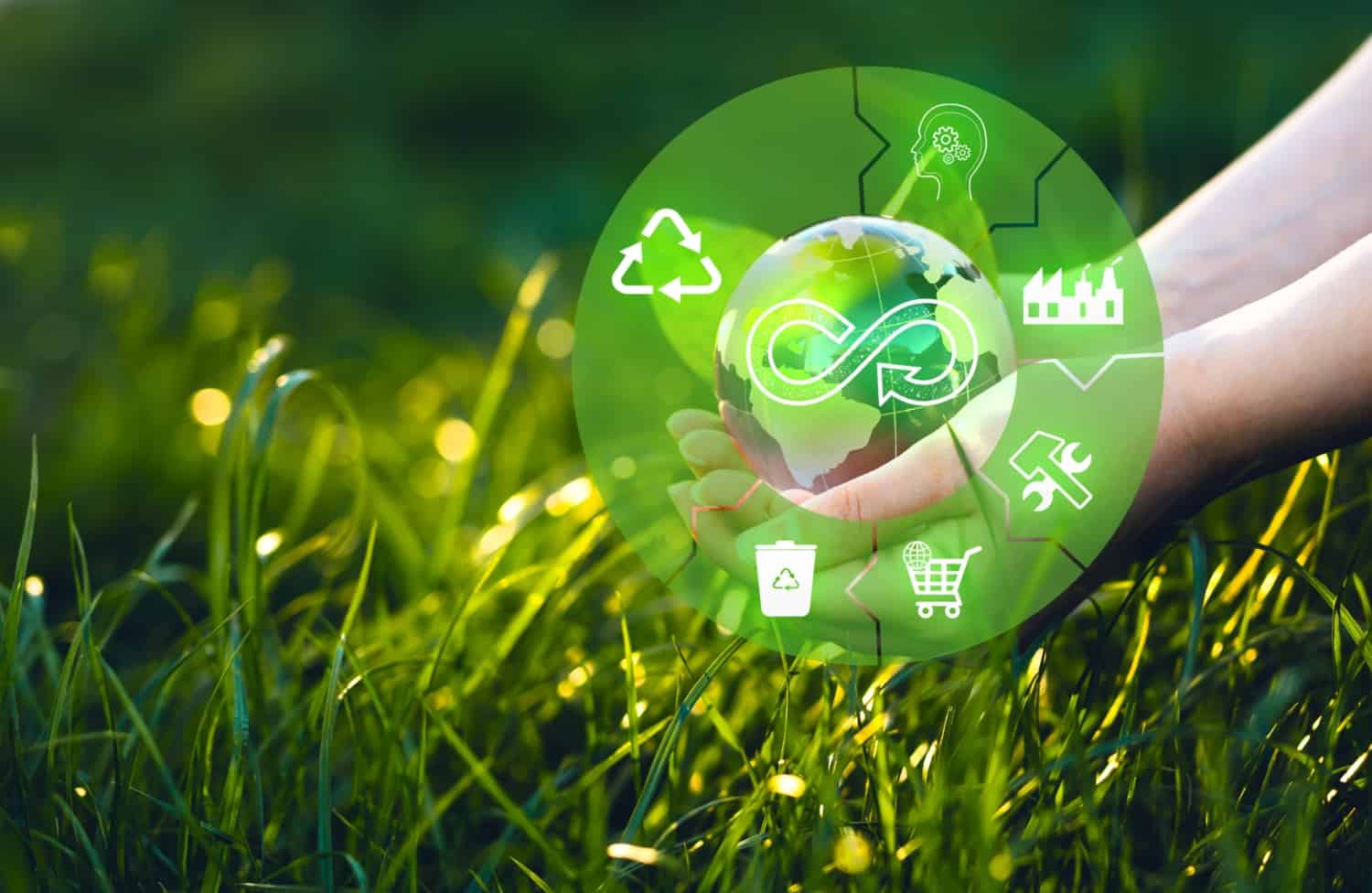
A circular economy is an economic system that lets you reduce waste and pollution and increase resource efficiency — maximizing resource reuse, streamlining product design, and ensuring products and services last for an extended period.

A circular model shares, leases, repairs, refurbishes, and recovers materials for a long time — focused on zero waste, reducing carbon footprint, and maintaining sustainability throughout materials’ lifecycles. Per Bain & Company, it delivers reliable supplies, resilient operations during inflation, and reduced emissions and waste. Companies like Adidas (partnered with Parley to turn plastic waste into textile thread for shoes) and Royal Philips & the Ingka Group (a major IKEA retailer) are already proving the model.
Key Takeaways
- Circular supply chains reuse and recycle materials — recycled and repurposed instead of disposed of after a single use, reducing waste and raw-material extraction.
- Product life cycles are extended through repair, refurbishment, and remanufacturing before materials are recycled — decreasing disposal and replacement rates.
- Renewable energy powers operations — circular supply chains use renewable energy and sustainable transportation to minimize environmental impact.
At a GlanceKey aspects of closed-loop supply chains
| Aspect | Key insights | Value to businesses |
|---|---|---|
| Design for circularity | Developing products for reuse, recycling, and refurbishment. | Reduces waste and extends product lifespan. |
| Supplier collaboration | Partnering with suppliers to ensure sustainability compliance. | Enhances transparency and supply chain resilience. |
| Reverse logistics implementation | Efficient product returns and recycling strategies. | Minimizes environmental impact and reduces costs. |
| Measuring & reporting progress | Tracking key sustainability metrics. | Improves decision-making and regulatory compliance. |
Topic 01Developing a closed-loop supply chain strategy
A closed-loop strategy drives both cost efficiency and sustainability: maximizing resource efficiency and minimizing waste reduces environmental impact while cutting raw-material procurement and waste-disposal costs. It requires designing for circularity, collaborating with suppliers, implementing recovery practices, and measuring progress.
Design products with reusable, recyclable, or sustainable materials that last and can be reprocessed once their life cycle is complete.
Work closely with suppliers, set clear evidence-based targets, and share insights to drive visibility and transparency in the supply chain.
Use sharing, leasing, refurbishing, and recovery, plus recycling and composting to return materials safely to an industrial process or the environment.
Set targets and monitor KPIs such as resource efficiency and waste reduction to track and report progress toward your goals.
Topic 02Reverse logistics & closed-loop systems
Per the International Journal of Production Research, a reverse logistics strategy is crucial for maintaining optimal inventory turn and operating costs — an eco-friendly practice that turns traditional supply chains into sustainable ones. Per Deloitte U.S., companies must understand how, why, and when customers return products to refine strategy and improve experience. Closed-loop management maximizes value creation over the product’s life cycle through dynamic recovery of value from returns.
- Identify returnable and recyclable products.
- Determine the most optimal method for product collection.
- Plan for handling these products after you collect them.
- Implement a sophisticated system to track these products.
- Monitor the system and make changes accordingly.
Topic 03The role of digital technologies
Per MIT Technology Review, digital technologies are critical to streamlining circular supply chains — unlocking value and supporting informed decisions. A 2022 Springer study notes that digitalization automates resource management while controlling and optimizing resources to reduce costs.

Make informed raw-material decisions — optimized materials, reduced toxicity and complexity, better reparability. Digital apps simulate product performance, and 3D printing customizes designs.
Repair, maintenance, refurbishment, and remanufacturing — with IoT sensors tracking product condition and blockchain monitoring ownership and provenance.
Recover resources from end-of-life products via efficient collection, sorting, and recycling — with AI/ML optimizing reverse logistics and robotics automating disassembly.
Topic 04Business models & the economics of circularity
The World Resources Institute highlights the better use of finite resources — and notes that about 45% of global greenhouse gas emissions come from manufacturing, making circularity crucial for the supply chain industry. A circular economy is projected to create $4.5 trillion in value by 2030, alongside better jobs and cleaner environments.
of worldwide greenhouse gas emissions come from manufacturing, including food production (World Resources Institute) — a core reason circularity matters for supply chains.
Circular business models (per Management Consulted)
- Resource recovery — buy and sell products when their parts’ lives end; make resources 100% recyclable rather than linear.
- Sharing platforms — share services on a single platform accessible by all.
- Product life extension — make efforts to extend a product’s lifespan.
- Product-service systems — create value in inner circles and cascading use circles.
Topic 05Impact on waste & greenhouse gas emissions
Per the World Economic Forum, circular supply chains reuse products again and again, reducing raw-material use and CO2 emissions. In Europe, industrial processes and product manufacturing/use contribute 9.10% of greenhouse gas emissions, and waste management 3.32%. The WEF outlines four critical principles for a circular economy:
- Using fewer resources
- Utilizing resources for an extended period
- Recycling resources
- Regenerating resources

Keeping resources in use longer lets companies extract maximum value before recovering or regenerating them — reducing raw materials, waste, and the energy required to manufacture new products, while delivering benefits like less food packaging and reduced single-use plastic.
Topic 06Design for circularity
Per Knowledge Hub, circularity maximizes products’ value and their materials throughout the life cycle — focusing on design for disassembly, single-fibre materials for end-of-life recycling, and durability and longevity.
Per McKinsey, integrating circularity requires a collaborative process accounting for sourcing, production, marketing, sales, and end-of-life handling.
Per Zalando Design, design thinking breaks sustainability into manageable opportunities — supported by experienced designers who cross-pollinate ideas across teams and educate customers.
Topic 07Partnerships & collaboration
A circular supply chain is a complex system that keeps resources in use for a long time, generating maximum value and recovering or regenerating materials at end of life. Partnerships and collaboration with suppliers and customers are reliable enablers — identifying threats and opportunities and sharing knowledge to improve resource efficiency and reduce waste.
For instance, you can partner with a supplier to manufacture sustainable materials and packaging, or collaborate with customers on take-back schemes. The advantages: access to new ideas and expertise, cost reduction through shared resources, economies of scale, and an improved reputation through a visible commitment to sustainability.
Topic 08Challenges & barriers to adoption
Despite the benefits, circular supply chains pose challenges that companies must plan for:
- Lack of awareness & understanding — many companies don’t grasp the full potential of the circular economy, making it hard to build support.
- Complexity — changing business models, processes, and supplier relationships costs money, resources, and time.
- Lack of incentives — without regulatory or financial incentives, it’s hard to justify the investment.
- Resistance to change — stakeholders, including suppliers, employees, and customers, often resist new practices.
Topic 09The future of circular supply chains
Per Forbes, circular supply chains have a promising future — though supply chain sustainability has grown complex, businesses that invest more in ESG initiatives can reduce waste and carbon emissions. As Information Week reports, companies are prioritizing circularity and sustainability amid major disruptions: implementing circular principles supports greater agility and helps eliminate the “take, make, and waste” model.
Final WordsThree things a circular economy does
A circular economy focuses on three things: it reduces waste and pollution worldwide, it keeps materials and products at their highest value for an extended period, and it regenerates natural systems.
Implement the principles of a circular economy to create sustainable supply chain networks — using finite resources better, designing out waste and pollution, and supporting the planet’s health. — Shantala Hickey, Director, ESG Division
Frequently asked questions
What is a circular economy?
What is a closed-loop supply chain?
What are the economic benefits of circularity?
How does a circular economy reduce emissions?
What challenges slow the adoption of circular supply chains?

Shantala joined GPSI’s team in 2022, following her post-graduate diploma in Environmental Management. She is responsible for the ESG Division and the corporate social responsibility strategy. Before joining GPSI, she held several management positions at Bombardier Aerospace as well as Galderma, a company operating in the pharmaceutical and cosmetics industry. She has more than 15 years of experience in procurement, logistics, and production planning. The environment and sustainable development are undoubtedly her greatest passions.
Related Work
Sustainability and ESG work from the GPSI practice.

Giolong International — Integrating Sustainability into the Supply Chain
Read case study →
The Role of AI in Creating Sustainable Supply Chains
Read article →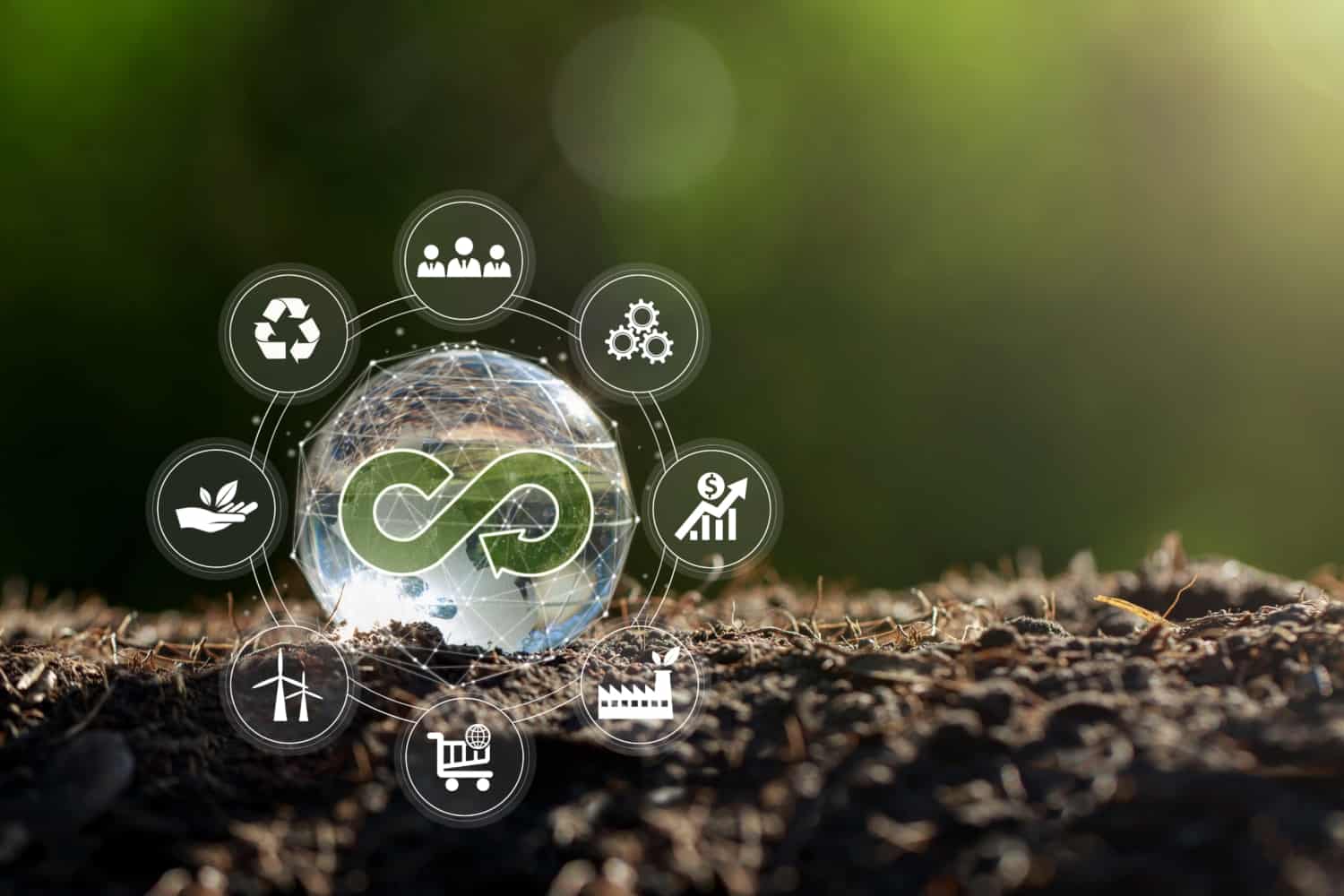
What Are the Sustainable Priorities?
Read article →Build a circular, closed-loop supply chain
GPSI’s ESG & Sustainability division helps companies design for circularity, implement reverse logistics, and measure progress — turning “take, make, waste” into lasting value. Let’s find a time to connect.
Explore Supply Chain Sustainability Canada toll free: 866-980-1387 · US: 316-263-1288 · UK: 44 121 295 6504